Ensuring Your Mooring Lines Are Fit for Purpose
Mooring Your Vessel 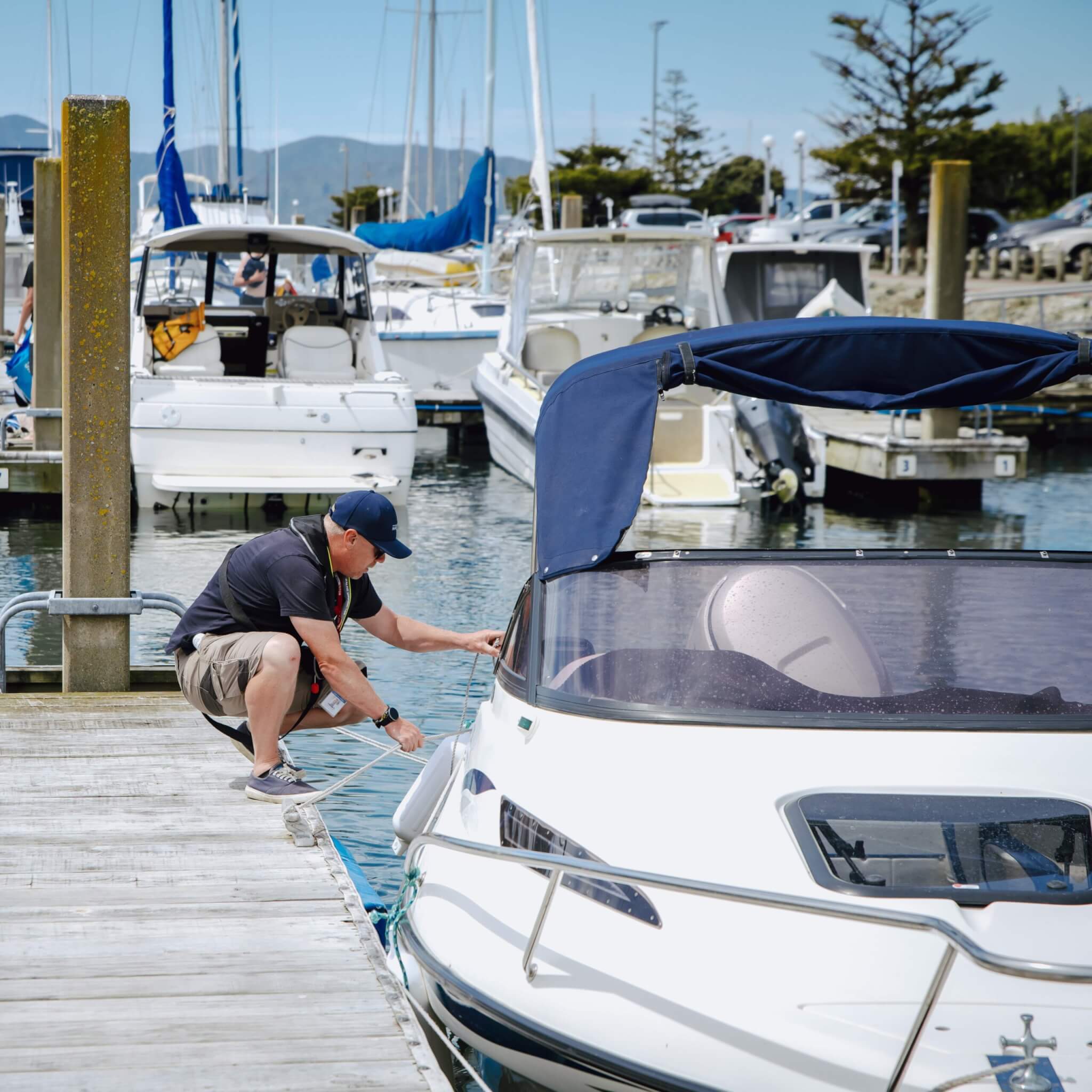
The responsibility for ensuring your vessel is securely moored rests with you. This includes using mooring lines of adequate size and strength, and ensuring all lines are kept in good condition. Worn, damaged, or undersized lines can place your vessel—and others nearby—at risk.
If you have any questions about mooring lines or the correct way to secure your vessel in its marina berth, please don’t hesitate to contact your marina team. We are always happy to provide advice and assistance.
What to Look for When Buying a Mooring Line
NZ Marina Operators Association Guidelines for Mooring lines.
Your mooring line must be polyester rope. Polypropylene degrades quickly in the sun, doesn’t have the level of stretch needed, and has a low breaking strength so it is generally a bad choice. Mooring lines most commonly come in three weave types: Three-strand, braided and double-braided. There are subtle differences between these three types of lines which are listed below, but ultimately any of these types makes an adequate mooring line.
Three-strand – Abrasion resistant, stretches more, easier to splice and less expensive.
Braided – Stronger, easy on the hands and looks good
Double-braided – Strongest, east to handle, abrasion resistant and controlled elongation, looks good.
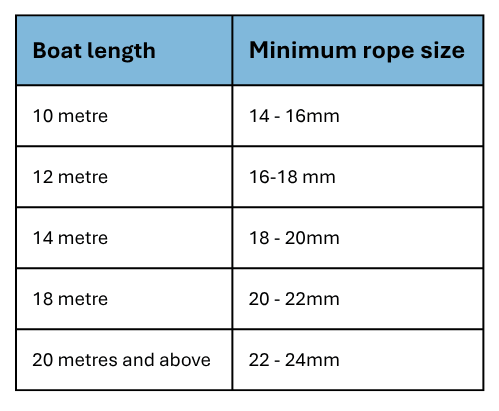
The table below shows the minimum rope sized required for you boat length.
 Attaching Mooring Lines
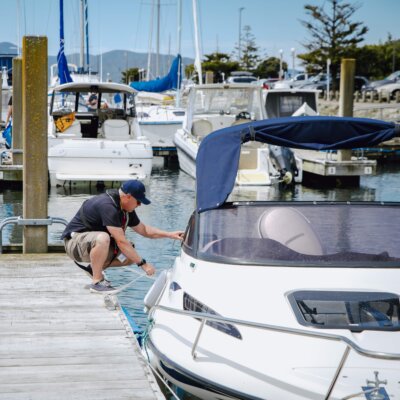
Mooring lines must be secured to marina fittings using a spliced eye and cow hitch.
Metal‑to‑metal connections are not permitted, as they can damage the marina’s galvanised fittings. For this reason, shackles and metal eyes must not be used and will be removed if found.
Mooring lines must not be attached directly to marina poles.
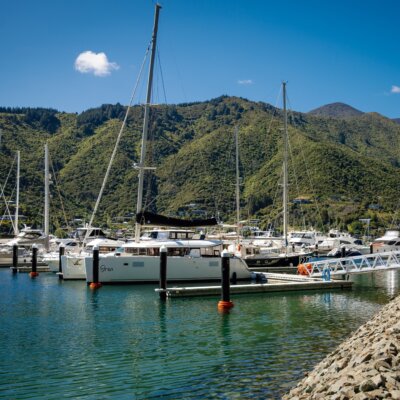
All vessels must be moored so they remain fully within the boundaries of their berth under all weather conditions.
This means:
- Vessels must not overhang the jetty or extend beyond the rear berth pole.
- Vessels should be positioned to avoid contact with marina structures or neighbouring vessels.