Backcountry Bliss: Six Marlborough Sounds Campsites
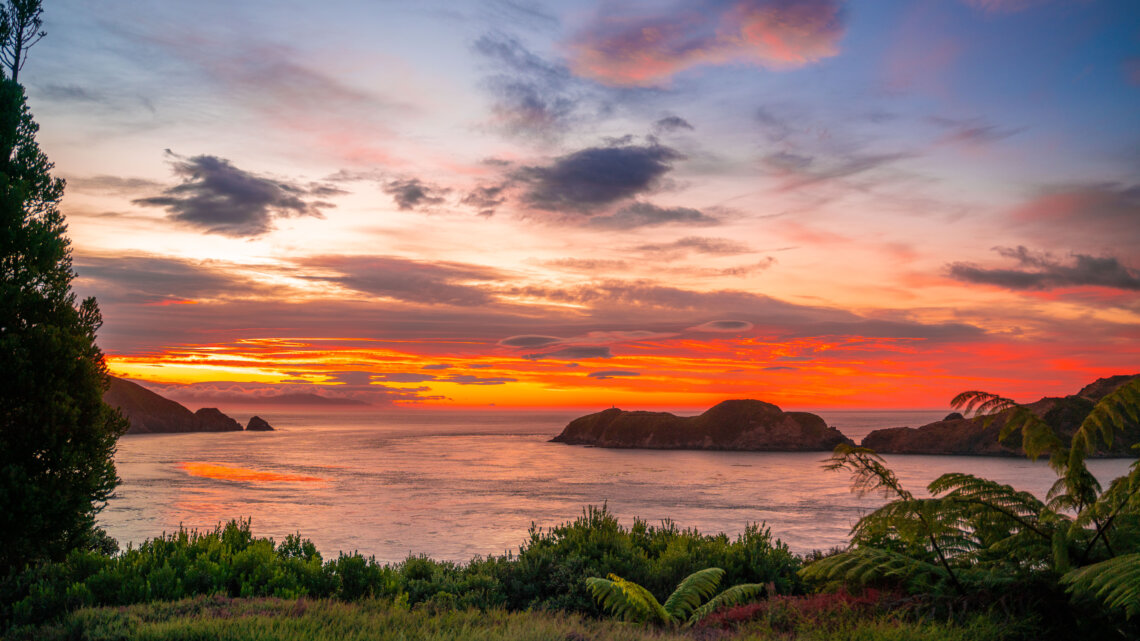
Image credit: MarlboroughNZ
Hidden throughout the intricate waterways of the Marlborough Sounds are some of Aotearoa’s most tranquil backcountry camping spots. While some of these campsites can be accessed by foot along the famous Queen Charlotte Track, many of them can only be reached by boat.
The isolated nature of these locations offers something uniquely special: the chance to fall asleep beneath a sky filled with stars and then awaken to the sound of the ocean, the morning calls of weka and a crescendo of birdsong echoing across the water.
For boaties with more friends and whānau than bunks, the backcountry campsites provide the perfect overflow option—letting some of your group pitch a tent ashore while others settle in for the night on the water. And for motor‑boat owners who don’t usually stay out overnight, these campsites open the door to a whole new kind of Sounds adventure.
These six secluded DOC campsites are close enough for an overnight adventure, but remote enough that you feel miles away from the world.
Kumutoto Bay Campsite – Queen Charlotte Sound
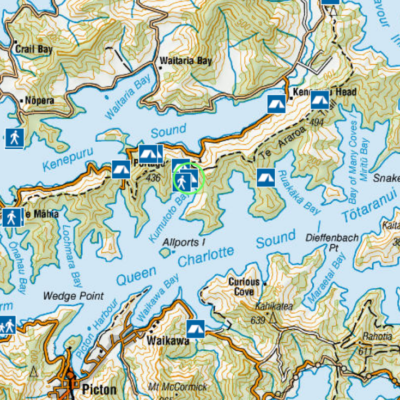
A sheltered east‑facing bay offering calm waters ideal for anchoring with walking tracks.
Facilities
- 4 tent sites
- Jetty
- Non‑flush toilet
- Stream water
- No fires, no dogs
Access
Easy access by boat into a quiet, protected inlet—perfect for a family-friendly overnight.
Mooring/Anchorage Details
Queen Charlotte Sound | Cruise Guide
Booking
New Zealand – DOC Booking Service
Ngaruru Bay Campsite – Tory Channel / Kura Te Au
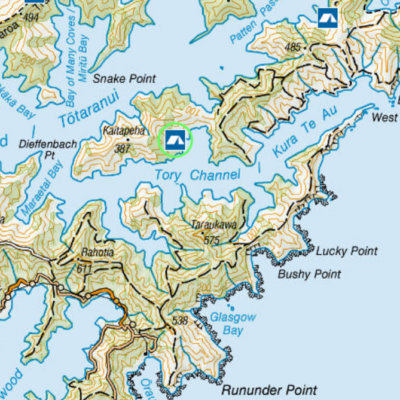
If you’re seeking solitude, Ngaruru Bay on the southern side of Arapawa Island is a peaceful, tucked‑away escape.
Facilities
- 4 tent sites
- Non‑flush toilet
- Tap water (untreated boil, before use)
- No fires, no dogs
Access
Reachable only by boat, with calm conditions needed for the exposed approach.
Mooring/Anchorage Details
Booking
New Zealand – DOC Booking Service
Whareunga Bay Campsite – Outer Queen Charlotte Sound
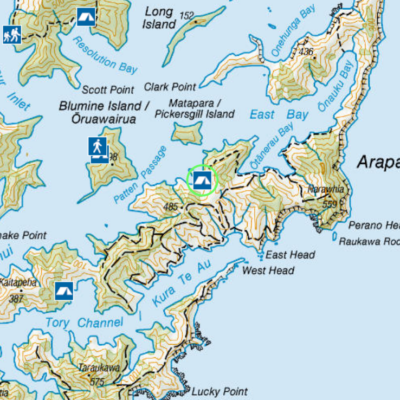
A north‑facing site that makes a great base for swimming, fishing, kayaking, and exploring the rugged coastline of Arapawa Island.
Facilities
- 10 tent sites
- Non‑flush toilet
- Tap water (untreated, boil before use)
- No fires, no dogs
Access
A popular overnight stop for boaties exploring the outer Queen Charlotte Sound.
Mooring/Anchorage Details
Queen Charlotte Sound | Cruise Guide
Booking
New Zealand – DOC Booking Service
Blumine Island / Ōruawairua Campsite – Pest‑Free Paradise
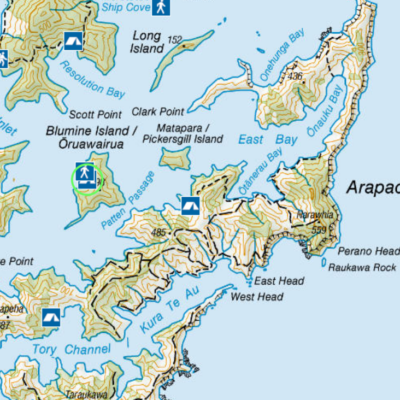
A picturesque, pest‑free island experience. Explore WWII gun emplacements, walk native bush tracks, and enjoy birdsong from dawn to dusk.
Facilities
- 6 tent sites
- Non‑flush toilet
- Tap water (untreated, boil before use)
- No fires, no dogs
Access
Boat-only access. Remember to check pest‑free guidelines before departing. Gear must be clean, sealed, and free of stowaway pests.
Mooring/Anchorage Details
Queen Charlotte Sound | Cruise Guide
Booking
New Zealand – DOC Booking Service
Schoolhouse Bay Campsite – Resolution Bay
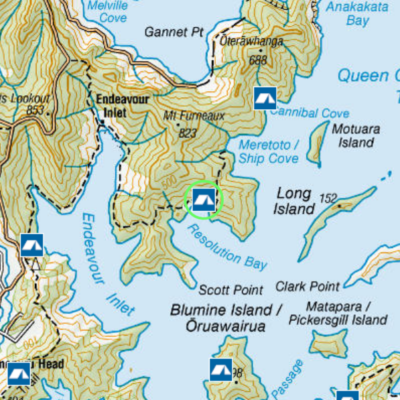
Located along the famous Queen Charlotte Track, this sheltered bay is perfect for mixing boating with walking or mountain biking.
Facilities
- 6 tent sites
- Non‑flush toilet
- Tap water (untreated boil, before use)
- No fires, no dogs
Access
Suitable for boat drop‑offs or overnight anchoring in favourable conditions.
Mooring/Anchorage Details
Queen Charlotte Sound | Cruise Guide
Booking
New Zealand – DOC Booking Service
Cannibal Cove Campsite – Outer Queen Charlotte Sound
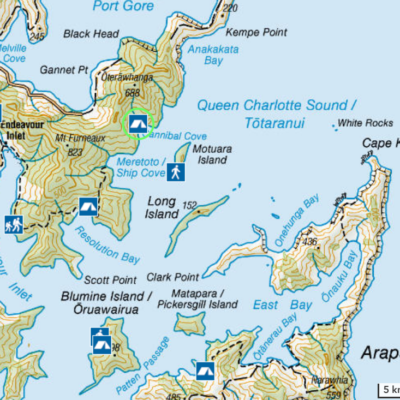
A remote, atmospheric site at the very edge of the Queen Charlotte coastline—ideal for hunters, kayakers, and adventurous boaties.
Facilities
- 3 tent sites
- Non‑flush toilet
- Stream water
- No fires, no dogs
Access
Boat‑only. The outer Sounds can be exposed plan with tides, wind, and swell in mind.
Mooring/Anchorage Details
Queen Charlotte Sound | Cruise Guide
Booking
New Zealand – DOC Booking Service
Safe Boating Tips for Your Backcountry Adventure
Because these campsites are remote, it’s important to plan ahead:
- Check the marine weather forecast
Marlborough Sounds conditions can change quickly. Check marine forecasts and update regularly.
- Log a trip report
Tell someone your route and expected return—and update them if plans change.
- Carry proper safety gear
Lifejackets, waterproof communication (VHF, PLB), a well‑stocked first aid kit, and navigation tools.
- Treat all water
Stream or tap water at these sites is not treated, boil or filter before use.
- Respect fire restrictions
Fires are currently prohibited at all six sites.
- Protect wildlife
These are precious coastal ecosystems. Keep speeds down near shore, avoid disturbing marine mammals, and follow island biosecurity procedures.